

A Houston Gardener's Guide to Tending Plants
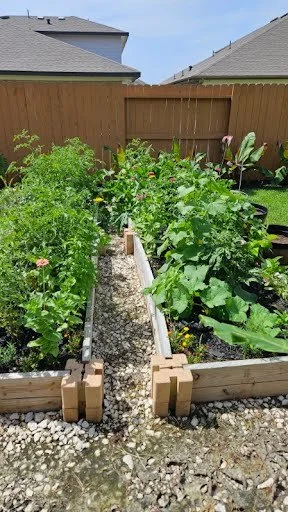
You did the hard part. You amended the soil, picked your plants, got everything in the ground at the right time, and now things are actually growing. This is the part where a lot of new gardeners expect to coast for a while. This is also, unfortunately, the part where Houston has other plans. Here's what to expect and what to do about it.
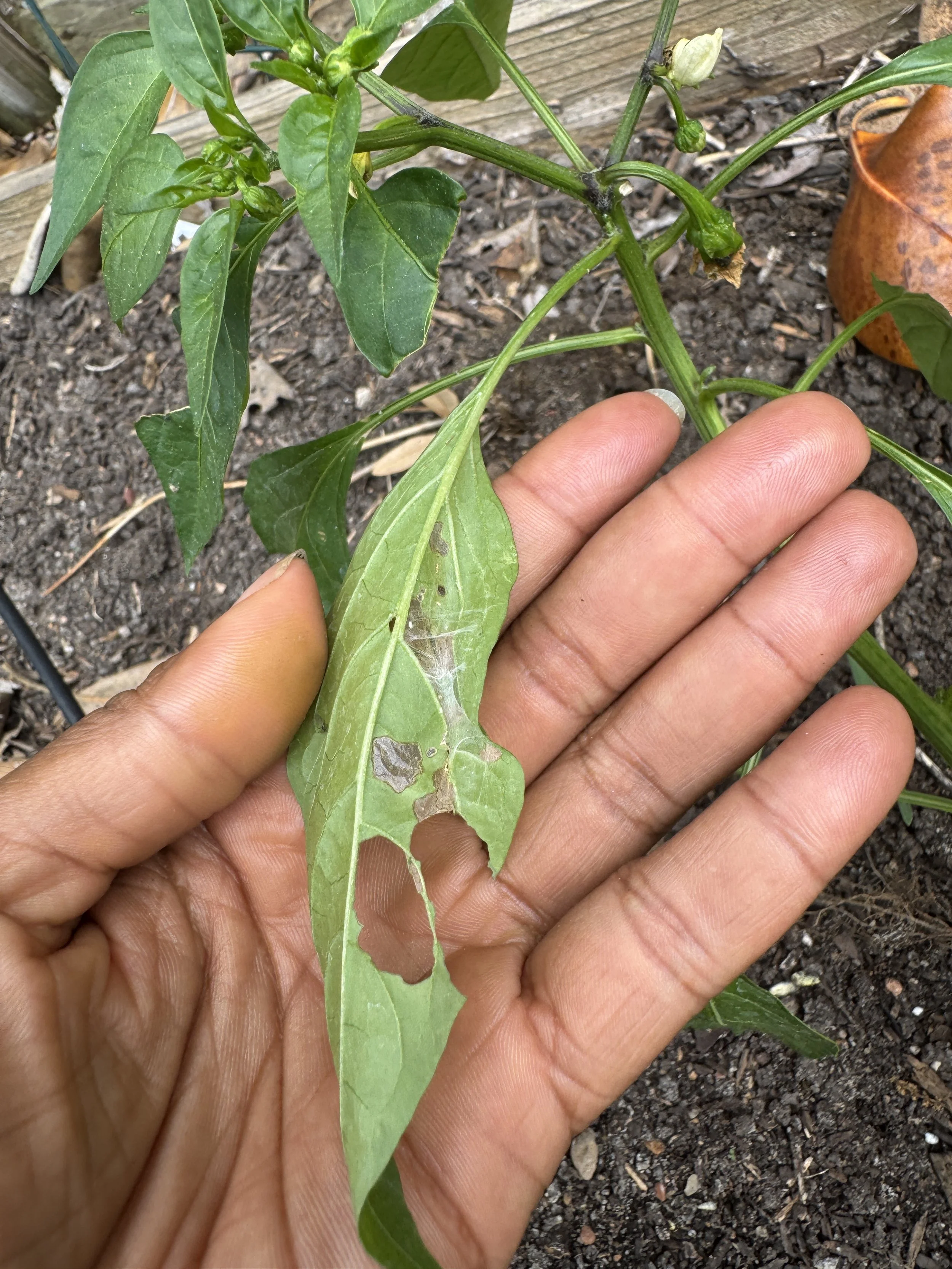
First, congratulations — something wants to eat your garden
If you've walked outside recently and noticed something has been at your plants, take a moment to appreciate what that means. You grew something good enough that other living creatures are trying to get to it before you do!
Now let's deal with it. The best, industry/research backed approach to addressing pests is called Integrated Pest Management, or IPM. It starts with a step most home gardeners skip entirely: looking closely over time before you act.
Step 1: Monitor
Walk your garden regularly — at minimum every few days during spring. You are looking for early signs of pest activity before populations build: holes in leaves, stippling, webbing, sticky residue on stems, frass on the soil below a plant. Check the undersides of leaves. Some pests, including aphids and spider mites, live there almost exclusively.
The goal is to catch things early, when your options are widest and the problem is smallest. A few aphids on a tomato plant is a Tuesday afternoon. A full colony that's been there two weeks is a project.
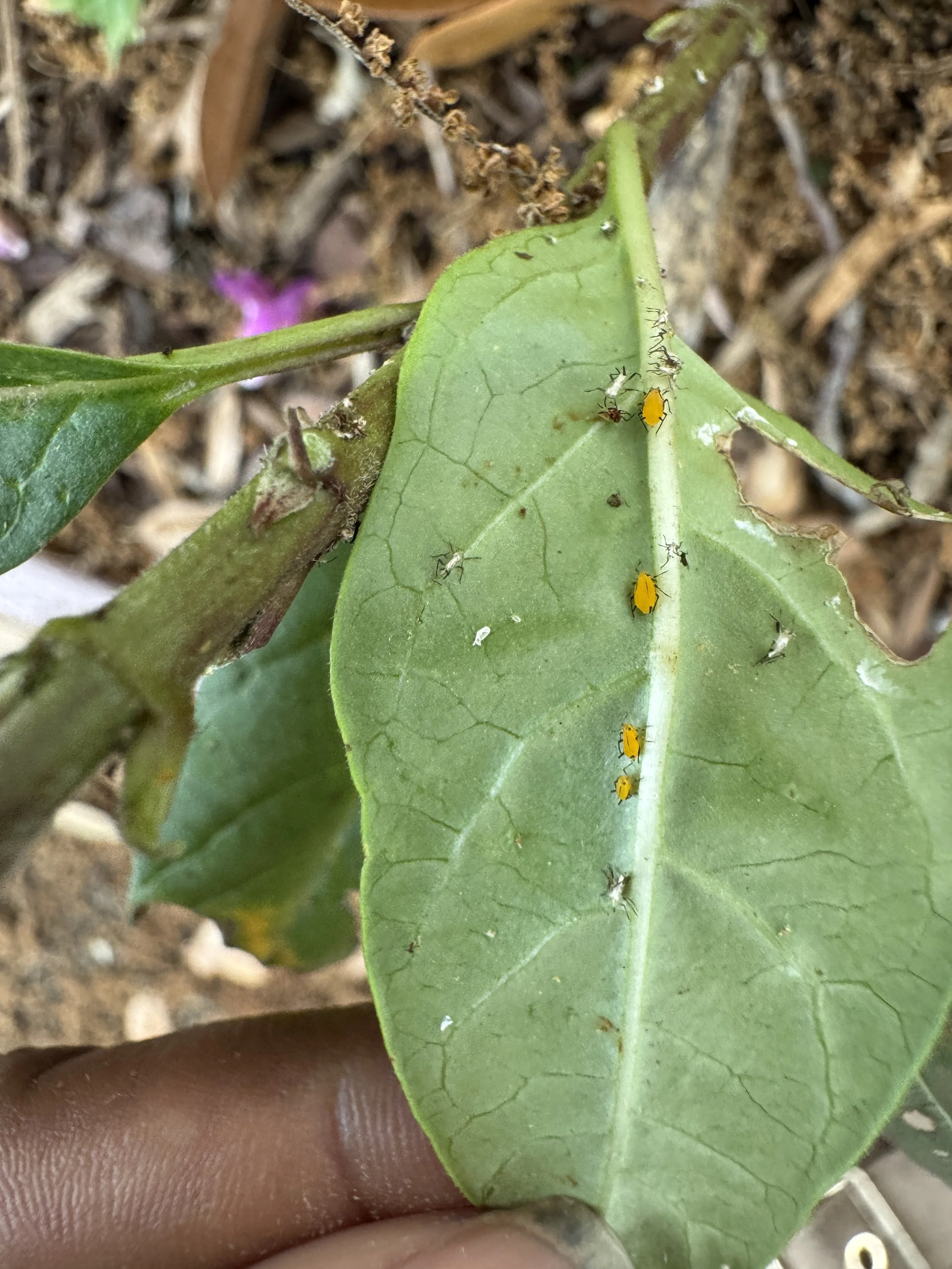
These oleander aphids (Aphis nerii) are also known as milkweed aphids. Spray these with water or remove them manually to before the infestation grows.
Step 2: Identify
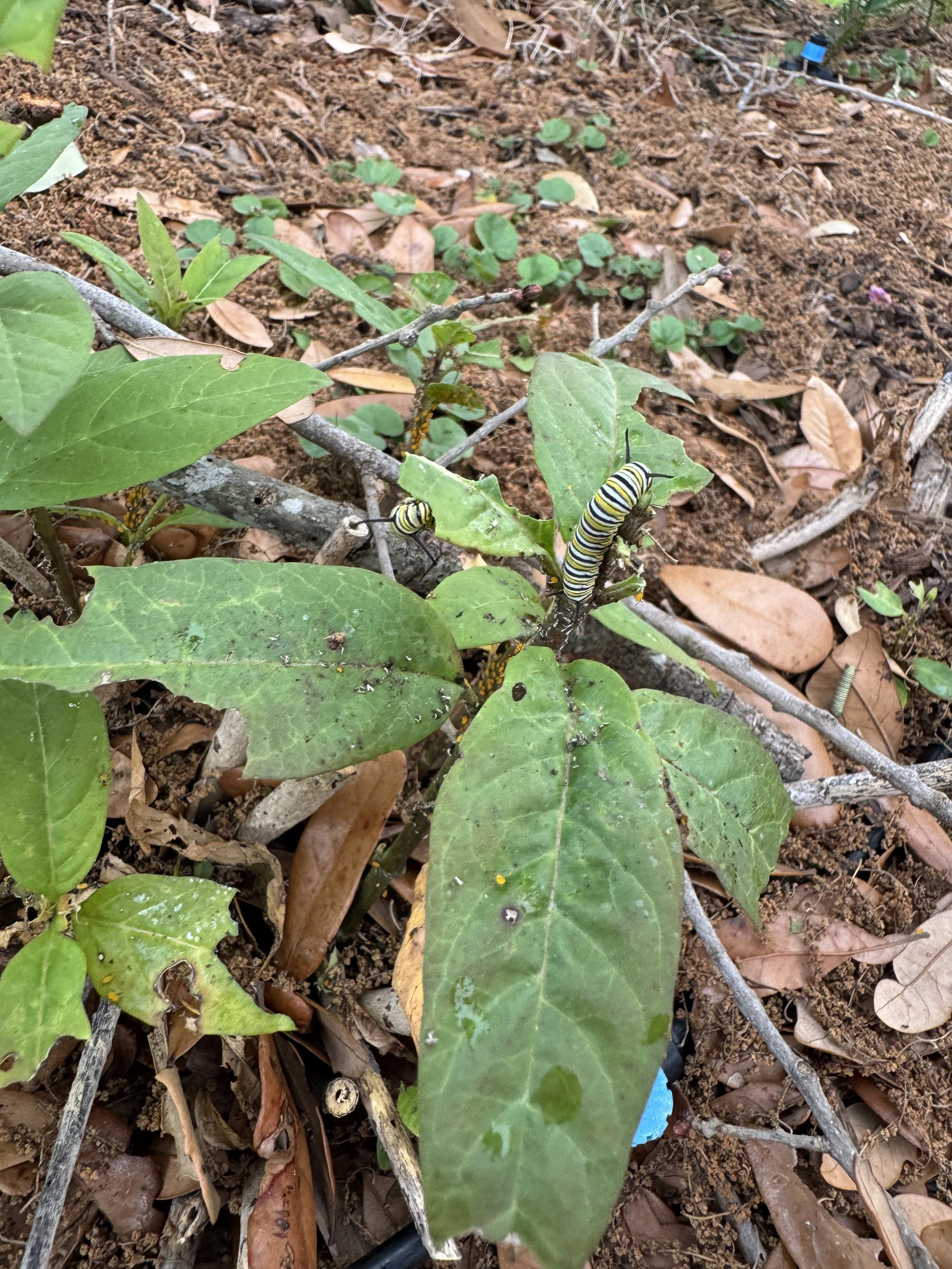
Monarch butterfly caterpillars is the whole reason I grow milkweed, so my assessment is to leave them. The aphids, on the other hand, have to go.
This is the step that changes everything. Not everything eating your garden is a problem. Some of it is beneficial. Some of it is cosmetic damage that a healthy plant will shrug off entirely. And some of it genuinely needs to be addressed — but the right response depends entirely on knowing what you're dealing with.
Here's what you might find right now in Houston spring gardens and what to actually do about each one.
Aphids cluster on new growth and stem tips, usually on the underside of leaves. They come in green, black, or white. A strong blast of water from the hose dislodges most of them and disrupts the colony significantly. If populations are heavy, insecticidal soap or neem oil applied in the early morning works well — and both are selective enough to spare most beneficial insects.
Caterpillars and hornworms are the ones responsible for that alarming overnight leaf disappearance on your tomatoes. Look for frass — dark pellet droppings — on leaves below and follow the trail up. Hand picking is the most effective first response. For smaller caterpillars, Bt (Bacillus thuringiensis) is an organic option that targets caterpillars specifically without harming beneficial insects.
Whitefly announces itself when you brush a plant and a small white cloud lifts off. Yellow sticky traps help monitor and reduce populations. Consistent neem oil or insecticidal soap applications — every five to seven days — will knock them back. Consistency is the operative word here.
Spider mites leave stippled, dusty-looking leaves and sometimes fine webbing on undersides. They thrive as April heats up, especially on plants against heat-retaining walls or in containers. A strong water spray disrupts them. Neem oil is effective. Well-watered, unstressed plants are much less hospitable to mites in the first place.
Leafminers leave those distinctive pale squiggly trails tunneling through leaf tissue. They look alarming and are genuinely annoying, but rarely cause serious damage to an otherwise healthy plant. Remove and dispose of affected leaves — don't compost them. Neem oil as a soil drench can interrupt the life cycle.
Step 3: Assess
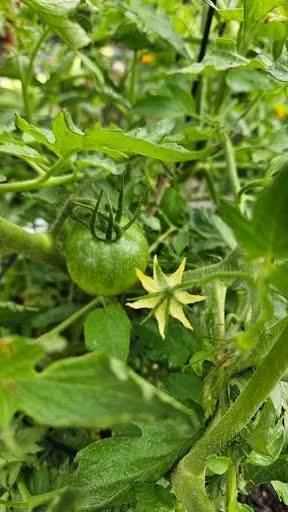
Before you do anything, ask: does this actually need intervention? A healthy plant can tolerate a surprising amount of pest pressure without meaningful damage. A few holes in the leaves of an otherwise thriving tomato plant is not a crisis. What you're looking for is whether the population is growing, whether the plant is visibly declining, and whether your beneficial insect population has had a chance to respond.
Give it a few days after you first notice something. Check back. If a predator population is building — and in Houston it often will — you may not need to do anything at all.
Step 4: Implement — in order
If action is needed, work through your options from least to most disruptive.
Prevent: I know, I know. It’s too late if you have a pest, but proper watering, soil set up, and good plant hygiene really is the first step.
Start mechanical: hand pick, water blast, remove affected leaves. This is almost always the right first move and it costs nothing.
Move to biological if the problem persists: neem oil, insecticidal soap, Bt for caterpillars. These are targeted enough to work on your pest without clearing the field of everything else.
Consider chemical controls only when all other methods have failed and the pest is genuinely winning. Broad-spectrum pesticides are a last resort — not because they don't work, but because they work on everything. They will take out the parasitic wasps and assassin bugs that were doing the job for free, and you'll find yourself in a worse position next season than you are right now.
What tending actually looks like week to week
Pest management is only part of the tend phase. The rest:
Water at the base of the plant, not on the leaves. Wet foliage in Houston humidity is an invitation for fungal issues. Consistency matters more than quantity — irregular watering stresses plants and makes them more vulnerable to both pests and disease.
Prune with intention. Remove leaves touching the ground, anything yellowing out, anything showing pest damage. Clear debris from the soil surface — it removes hiding spots and breaks pest cycles. Pinch suckers on indeterminate tomatoes to keep the plant focused on fruit rather than endless new growth.
Weed every week. A small weekly session takes five minutes. The same weeds left for three weeks take thirty. Any plant growing that you didn't put there is competing for the water and nutrients your intentional plants need.
Harvest regularly. This one surprises people. Harvesting frequently — especially herbs, greens, and flowers — signals to the plant to keep producing. Leaving overripe fruit on the vine attracts pests and tells the plant its job is done.
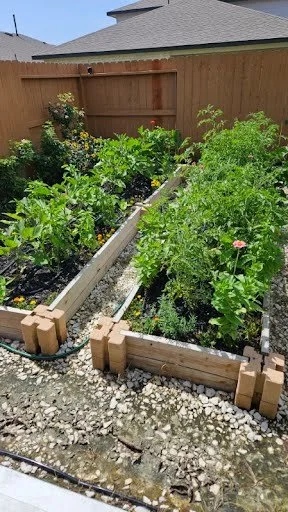
The download that makes all of this easier
Good garden habits don't have to be complicated. The Flourish Good Gardening Habits guide covers watering, pruning, weeding, and harvesting in one simple reference you can keep near your garden or on your phone. It's free and it's the checklist I wish every new gardener had in hand from day one.
»Download: Good Gardening Habits Guide«
If you're feeling like your spring garden needs more than a checklist — if something is off and you can't quite figure out what — a Garden Review is a 30-minute session where we look at what's happening and figure out what it needs. Sometimes that's all it takes.