

My Plant Looks Fine. So Why Isn't It Doing Anything?
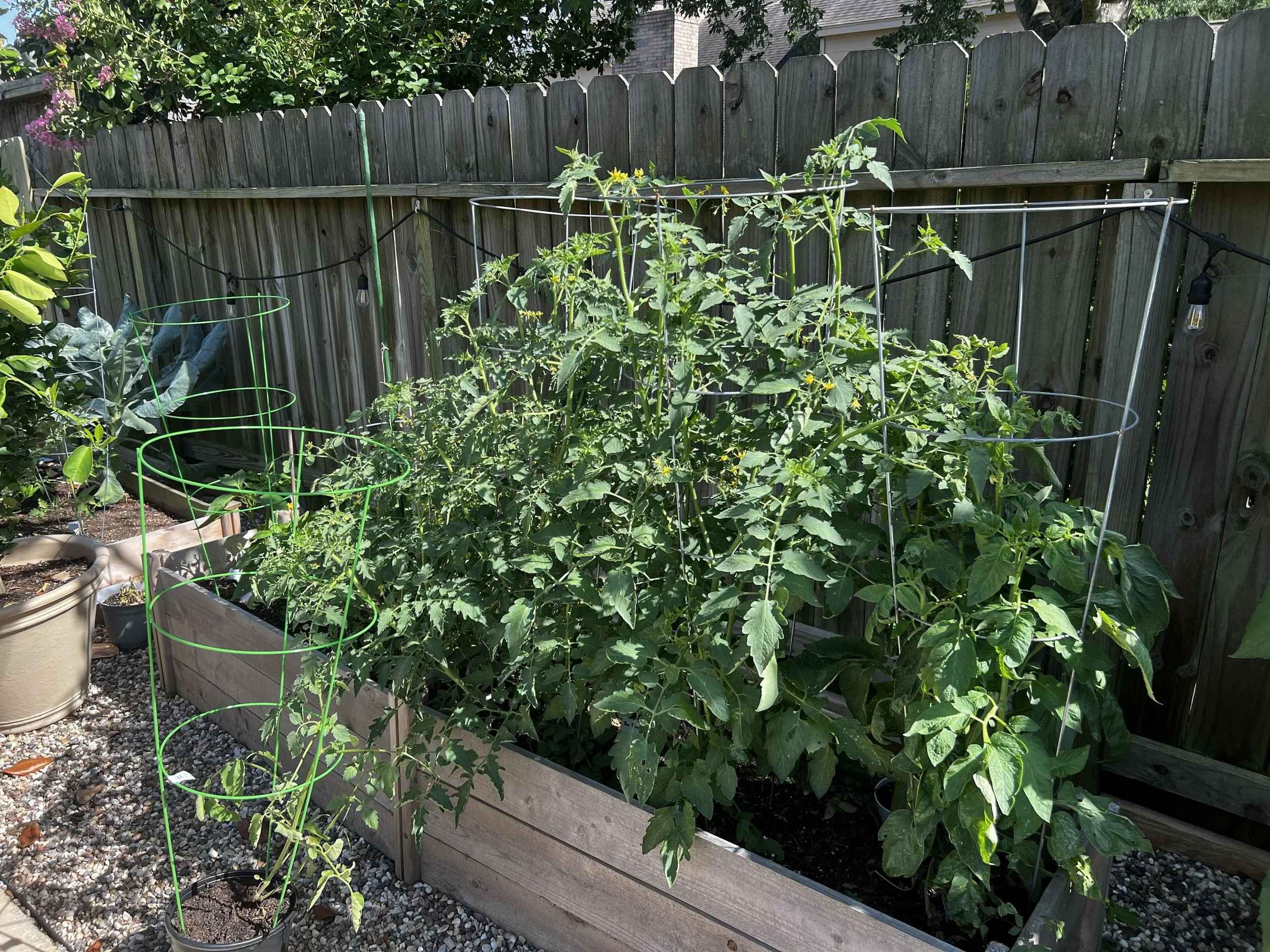
My client in Texas City had gone all in on raised beds. Multiple beds, a solid composting program, a row of tomato plants he had begun to resent — tons of green shoots and a single tomato. When I asked what he’d been feeding them he pointed to a nitrogen-rich fertilizer and said "the good stuff." He wasn't wrong. He just fixed the wrong problem.
April is the month gardeners all over Houston run into the most common nutrition issues of the season. Here's how to recognize them and what to actually do about it.
The plant that won't grow: nitrogen
If your plant looks pale, stunted, and generally unambitious, nitrogen is the first suspect. Nitrogen drives vegetative growth — leaves, stems, overall size. Without enough of it, plants go quiet. You'll see light green color overall, yellowing on the lower leaves first, and a general lack of enthusiasm.
This shows up a lot in new raised beds because even good bagged soil runs low on nitrogen faster than you'd expect, especially once you start watering consistently. It also shows up in established fruit trees and shrubs that have been in the ground a season or two and quietly used up what was there.
What to add: side dress with blood meal for a faster nitrogen boost, or worm castings if you want something gentler and slower. Worm castings are harder to overapply and they improve soil structure at the same time, which makes them a good default for raised beds and containers. Either way, apply around the drip line of the plant, water it in, and give it a couple of weeks.
The plant that won't fruit: phosphate
Here's the one that trips up experienced gardeners. You can feed a plant all the nitrogen in the world and it will reward you with an enormous, beautiful, completely fruitless plant if phosphate is the missing piece.
Phosphate is what the plant uses to build its root system and — critically — to transition from growing to reproducing. Flowering and fruiting require it. Without enough phosphate, the plant just keeps doing the only thing it can do: make more leaves.
In vegetables, this is the pattern I see most in late April. Big tomato plants, great color, zero flowers. In fruit plants, it shows up as trees and shrubs that leaf out beautifully but produce little or nothing. A citrus tree that's been in the ground a couple of seasons with no fruit is often a phosphate story. So is a blueberry bush that's putting on new growth but not setting berries.
The deficiency itself can look subtle early on — plants are a bit stunted, leaves may be darker than normal, and you might notice a bronze or purplish tint on the undersides. But the real tell is the absence of flowers when you'd expect them.
What to add: bone meal is the classic organic amendment for phosphate. Work it into the soil around the drip line of the plant rather than piling it at the base. If you've been heavy on nitrogen, ease off and let the phosphate catch up. A tomato or pepper in this situation will usually start setting flowers within two to three weeks once phosphate is available.
Yellow leaves with green veins: iron
This one is almost guaranteed at some point if you're growing in Houston clay or in containers with a high pH potting mix. Iron deficiency shows up as leaves that turn yellow or even white while the veins stay distinctly green — a condition called iron chlorosis. It looks alarming but it's incredibly common here.
It's usually not that your soil lacks iron. It's that Houston's naturally alkaline clay locks iron in a form plants can't access. Blueberries are especially prone to this because they need acidic soil to thrive, and Houston's pH works against them constantly. Citrus shows it too, particularly in containers where the pH can drift upward over time.
What to add: chelated iron, which is iron in a form that bypasses the pH problem. Apply it as a soil drench or foliar spray and you'll usually see improvement within a week or two. For blueberries especially, addressing soil pH over time — using acidic fertilizers and sulfur amendments — will help your plants access nutrients more freely and reduce how often you're chasing this issue.
Curling or dying new growth: calcium
Calcium deficiency shows up at the tips first — tender new leaves that look pale, misshapen, or scorched at the edges. Leaf buds may die back while older leaves stay perfectly green. In the vegetable garden, calcium deficiency is also the culprit behind blossom end rot on tomatoes and peppers — that dark, sunken spot on the bottom of the fruit that makes you want to give up entirely.
Houston's heavy rain seasons can leach calcium out of raised bed soil faster than you'd expect. Consistent watering also matters: calcium moves through the plant with water, so irregular watering makes deficiency symptoms worse even when calcium is present in the soil.
What to add: crushed oyster shell, gypsum, or a calcium-specific foliar spray. Gypsum works well worked into the soil around existing plants without dramatically shifting pH. If blossom end rot is already showing up on your tomatoes, a foliar calcium spray is the fastest way to get it where it needs to go.
Leaves dying from the edges inward: magnesium
Magnesium deficiency starts at the leaf margins and works inward — a distinctive paleness that spreads from the outside of the leaf toward the center, with no spots. Leaves eventually die and drop. This one shows up often in tomatoes and peppers, but it's also one of the most consistent issues I see in blueberries. Blueberries are heavy magnesium feeders and they'll deplete what's in the soil steadily over time. Citrus can show it too, especially in containers.
What to add: Epsom salt dissolved in water, applied as a soil drench or foliar spray. Work it into the soil around blueberries at the start of the season as a preventive measure if you've seen this pattern before. It works quickly and it's inexpensive.
The honest answer: get a soil test
All of these issues are fixable, but the real answer is to know what your soil is actually missing before you start adding things to it. The Texas A&M AgriLife soil testing lab charges $12 and will tell you exactly what's present, what's missing, and what to add. It's the single best investment you can make before a new planting season. Sample at least 6 inches deep from multiple spots in your bed, mix them together, and send it in.
In the meantime, download the plant nutrient deficiency guide below — it's a quick visual reference you can take outside with you when something looks off. Match the symptom to the issue and you'll know where to start.
[Download: Plant Nutrient Deficiency Diagnosis Guide]
And if you're still not sure what your plant is trying to tell you, that's exactly what a Garden Review is for. Sometimes a second set of eyes makes all the difference.