

What's Missing From Your Landscape Isn't More Plants
Let me introduce you to three clients:
The enthusiastic newcomer who bought everything she loved and ended up with a yard that feels like a collection rather than a composition. The creative gardener whose vision is exactly right but isn't landing the way she imagined from the street. And the reluctant inheritor who hates her yard but doesn't know where to start and doesn't want to spend a fortune doing it.
None of them need more plants. All of them need the same thing: to understand the underlying logic that makes a landscape feel intentional rather than thrown together. It’s geometry. Don’t panic, it’s easier than highschool math. And once you can see it, you can't unsee it — and more importantly, you can fix almost anything with it.
Here's what that looks like in practice
Client 1: The Enthusiastic Transplant
The situation: She moved to Houston from out of state, fell in love with gardening, and spent her first spring buying every plant that caught her eye at the nursery. No plan, just enthusiasm — which is one of my favorite things about new gardeners. By fall, most of it hadn't made it. What survived looked sparse and disconnected, like the plants were strangers at a party who didn't know each other. Her house is formal and symmetrical — a centered front door, matching windows on either side, traditional brick exterior.
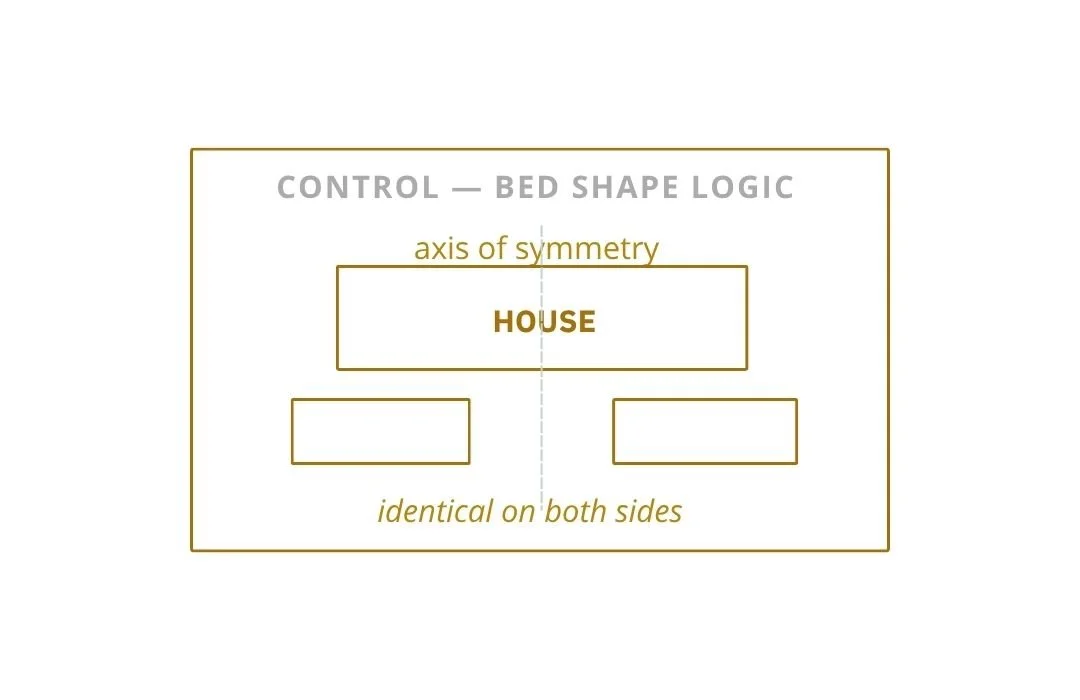
This geometry shows mastery of the environment and enhances classical homes.
The diagnosis: Geometry mismatch. Her house is asking for Control geometry — symmetry, matched pairs, a clear focal point at the center. What she planted was a loose informal mix with no axis and no repetition. The house and the landscape were speaking two completely different languages, and the result felt off even when individual plants looked fine.
The fix:
Identify the center axis of the front facade and treat it as the organizing line for everything in the beds
Anchor each side of the entry with the same plant — same species, same size, same position. This single move does more for a formal house than almost anything else
Replace the mixed informal planting with two or three species repeated consistently across both beds rather than a different plant in every spot
Add a clean bed edge. Control geometry lives and dies by the line between bed and lawn — a ragged edge undermines everything above it
The goal is not a complicated landscape. It's a legible one. Matched shrubs, a consistent groundcover, a clean edge, and a clear focal point at the door will outperform twenty different plants every time on a house like hers.
Client 2: The Wildflower Gardener
The situation: She planted a naturalistic wildflower meadow in her front yard. It was genuinely beautiful — loose, full of color, alive with pollinators. Her lawn company mowed it down twice while she was at work. She was devastated. But even before that happened, something about it wasn't quite reading the way she had imagined it would from the street.
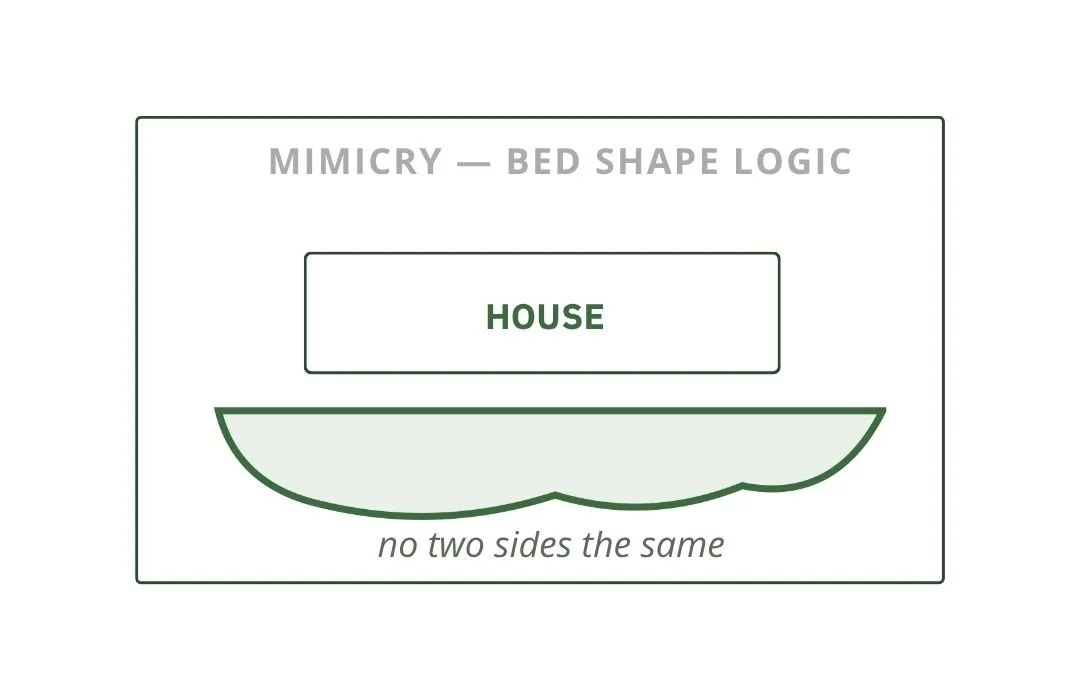
This geometry mimics nature but it doesn’t mean it has no rules.
The diagnosis: The right geometry, unanchored. She was instinctively working in Mimicry — the geometry of nature, of sweeping irregular curves and odd-numbered plant clusters that bleed into each other. This is exactly where wildflower gardens belong. The problem wasn't the plants or the style. It was that without a defined bed edge and a repeated visual element to create rhythm, the planting read as accidental from the street rather than intentional. The lawn company mowed it because it looked like lawn. A passerby couldn't tell the difference either.
The fix:
Define the bed clearly with a strong edge — steel edging, a stone border, or even a low border plant at the front that signals "this is on purpose"
Choose one plant to repeat at intervals across the entire bed. It doesn't need to dominate — it just needs to recur. That repetition is what creates rhythm and makes a naturalistic planting read as designed
Add a single taller focal element off-center — a native shrub, a ornamental grass, anything that gives the composition a visual anchor point from the street
Have the conversation with the lawn company about which beds to avoid. A clearly edged bed helps that conversation significantly.
She didn't need to give up her meadow. She needed to frame it. Same plants, completely different result.
Client 3: The Reluctant Inheritor
The situation: She inherited a landscape from the previous homeowner — overgrown foundation shrubs, mondo grass edging every bed, the whole thing. She found it suffocating, boring, and relentlessly high maintenance. She didn't want to spend a lot to fix it but she also couldn't live with it. Her instinct was to tear everything out and start over, which felt overwhelming and expensive.
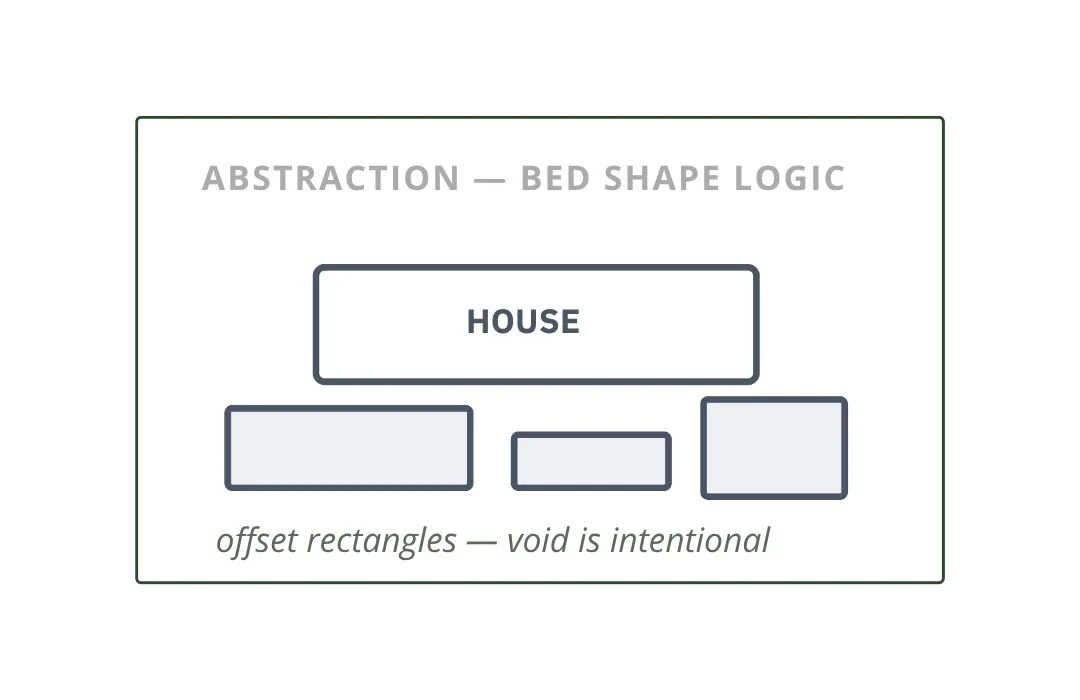
Less is definitely more! Breaking up a monolithic front yard into “rooms” creates space and an easy, lived in feeling.
The diagnosis: What looked like a problem was actually an opportunity. She wasn't stuck with a bad landscape — she was stuck with the wrong geometry for her personality. The existing planting was Control-Lite: the bones of a symmetrical foundation planting gone soft and overgrown, trying to be tidy and failing. But when I asked her what she actually wanted, the words she kept using were open, calm, and easy. That's not Control. That's Abstraction.
Abstraction geometry treats the ground like a floor plan. Bold rectangular beds, mass plantings of a single species that create a textural block, and — crucially — empty space used as a design element rather than something to fill. The void isn't neglect. It's the point. For someone who finds a densely planted yard suffocating, Abstraction is a revelation.
The fix:
Remove some of the overgrown foundation shrubs but leave large shrub the corner — this is the spend, but it's a one-time reset
Replace with one or two mass-planted species in sharp-edged rectangular beds aligned to the architectural lines of the house. A single ornamental grass repeated across the front. A groundcover in a clean rectangle. Less variety, more intention
Leave deliberate open space — a gravel panel that acts as a path, a simple lawn section, a clean expanse of mulch beneath the trees. Resist the urge to fill it
Choose low-maintenance plants that want to be in Houston and largely take care of themselves once established. The maintenance burden drops dramatically when every plant is right for its spot and the design isn't fighting the site
What she thought was a landscape she hated turned out to be a landscape that was simply wrong for her. The replacement was calmer, more modern, and easier to maintain than anything she had inherited.
The thing all three had in common
Before any of these fixes made sense, we had to understand what the site was actually offering — sun, water, soil, existing obstructions. Geometry tells you how to arrange things. Your site tells you what can actually survive in those arrangements. Skip the site assessment and you're back to buying plants you love and hoping for the best.
The drawing key in the download below is the same one I use with every client at the start of a consultation. It takes about twenty minutes to complete and it will change how you see your yard.
[Download: Site Assessment Drawing Key]
If you'd like help assigning a geometry to your yard and figuring out what it actually needs, a Design Consultation is the place to start. We'll walk the site, map it together, and leave you with a clear direction — not just a plant list.