

Fall Veggie Gardening in Houston 101
Spring really does strike back for gardeners in Houston. We are gifted with an amazing second run of warm temperatures into November, giving us a second chance at the veggie garden of our dreams. That said, there are a few things you should know when gardening in fall.
2 Seasons, 1 Fall
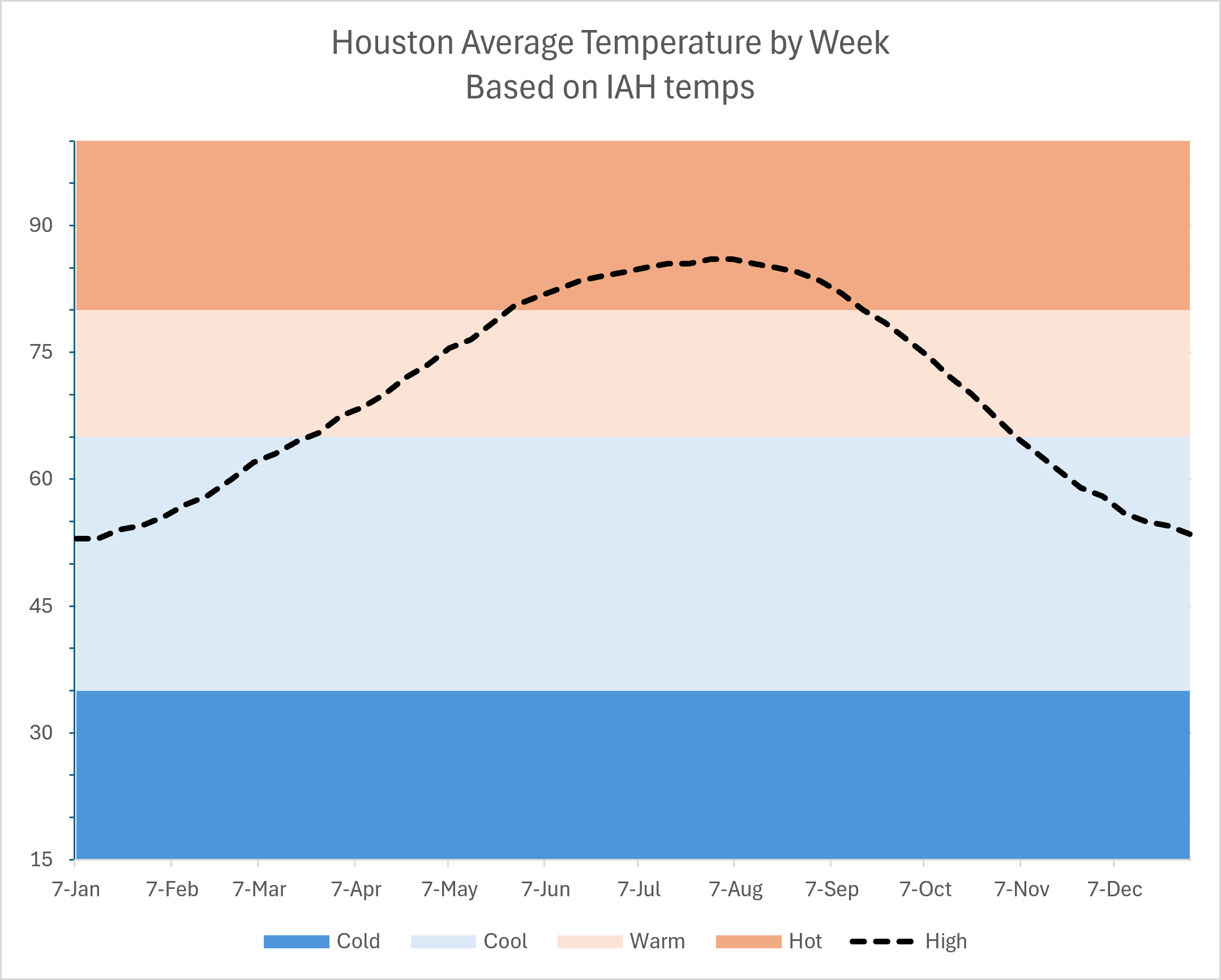
Graph showing average temperature in Houston as it passes through cool, warm, and hot season.
In Kitchen Garden Revival, Nicole Burke introduces the easy and useful notion of gardening seasons that are warm, hot, cool, or cold based on the temperature range and chance of frost in an area. Why is it useful? Because it proves that fall for Houston is a lie.
Whereas most northern cities transition from a hot to warm climate in July and a warm to cool in September, Houston transitions from hot to warm in September and from warm to cool in late October/November. And then we never get a solid season of cold (just a few freezes). This means you can sneak in a whole warm season from August to November AND a cool season from October/November through March of the next year.
The Narrow Warm Season
The warm season in fall is 4 weeks shorter than it is in the spring, at about 63 days. It doesn't officially start until the temperature highs are closer to or under 90, which is usually well into September.
Now I'm going to hold your hand while I tell you this: just because it's spring again, doesn't mean you should plant slicer tomatoes and big cucumbers. Cucumbers take 50-70 days to harvest from transplant and tomatoes take 60-85 days. And that is not from seed. That is from transplant. Therefore, when planting warm season veggies, you have a choice to make. Choose varieties of tomatoes and cucumbers with the shortest time to maturity, or plant early.
Choosing a faster growing variety is nearly always the best choice. For tomatoes, grape or cherry varieties do great, and the Early Girl variety is a great medium-sized option. For cucumbers, your smaller slicers, pickles, and minis are good for this.
If you choose to plant early, consider using shade cloth over the new starts to protect their tender leaves. Be prepared to water them more frequently, as they won't have developed the roots to deal with the heat. Planting early is more work, but it can be worth it if you can get your plants through the warm season in good health.
Managing Space
Due to the overlap between warm and cool season, managing limited garden space in a single raised bed or a few pots can be a challenge. However, if you pick short-maturity varieties for your warm plants, refresh your beds with food and compost, and plant cool season crops later, you can get both seasons in. I like to use tomatoes and broccoli as an example of this because they are both big plants, heavy feeders, and have longer days to maturity on average. This is how I manage this conflict:
September - I buy and install transplants of an early-to-harvest, indeterminate grape or cherry tomato variety that can fruit in 60-70 days, planting them the minute they become available. I'm not skimpy on fertilizer or water.
October- Tomato plants should take off and set fruit by the end of the month. I trim suckers constantly, as I want to limit any offshoots. We don't have time or energy to waste on building lots of new vines. I start looking for or buying broccoli around Halloween.
November- My tomatoes only have two weeks for harvest, so I pick them daily. The party is over after the first week because it's time to prep for the cool season crowd. I cut down my tomatoes, add compost, worm castings, and slow-release fertilizer to prep the bed for the broccoli. I get my broccoli in the ground by mid-November, usually by the Nutcracker Market (iykyk).
Viola! We have successfully gotten two season in one!
Letting the Garden Rest
If the warm season sounds stressful, there is always the option to allow your beds to rest between the hot season (eggplants, okra) and the cool season. Consider planting clover or a bunch of peas in empty beds. They are nitrogen-fixing, make good green compost for your cool season beds, and dissuade weeds from setting up shop.
The Long Cool Season
I'm convinced that when Houston gardeners say that fall is their favorite gardening season, they really mean cool season. The weather is great, the plants are superb, and it feels like the garden isn't fighting for its life anymore. No more daily watering, no more mosquitoes. The best part is that this season lasts all the way until spring, which allows us to grow some pretty slow-growing stuff like cauliflower, broccoli, and cabbage to develop and fruit. We can also plant a salad garden with fast-growing kale, lettuce, bok choy, cilantro, dill, and parsley. All of these plants love our sun and can manage the chill. You can plant these as early as October or wait until your warm season garden is over. Either way, it's time to take things easy.
Cold Protection
Remember when I mentioned a cold season? It's usually when the average temperature is below freezing and it occasionally snows. Houston doesn't get a cold season, but we do get cold weekends, frosty overnights, and the dreaded hard freeze. These plants do require protection from these elements, and whatever you cover them with cannot smoosh (technical term) the plant under it. I love the mini hoop houses that you clip frost cloth to for just this reason.
Cool Weather Flower Companions
People tend to plant only veggies and herbs in their garden but then demand that they get pollinators in spring. Guess what? Those pollinators need food all year. Be kind and plant cool season flowers in your garden next to your food plants to encourage the ecosystem year-round. Dianthus, viola, petunia, alyssum, and lobelia are excellent options for when it gets cooler. Or do one better and include an insect hotel in the garden.
Want more helpful tips on growing in Houston. Subscribe to our newsletter, the Flourish Dispatch.