

3 Native Plants in 3 Design Styles
Native Plants Aren't a Style. They're an Ingredient.
Ask most Houston gardeners what a native plant garden looks like and they'll describe wildflowers, informal drifts, a loose naturalistic meadow that looks like it happened on its own. Definitely not formal. Definitely not modern.
That picture isn't wrong — it's just incomplete. And it's keeping a lot of people from using some of the toughest, most beautiful plants available in this climate because they think native means one specific aesthetic.
So here’s the news: Native is a plant choice. Style is a geometry. The two are completely independent of each other, and once you see that, your plant palette gets a lot more interesting. The three style geometries I like to use are control, mimicry (of nature), and abstraction.
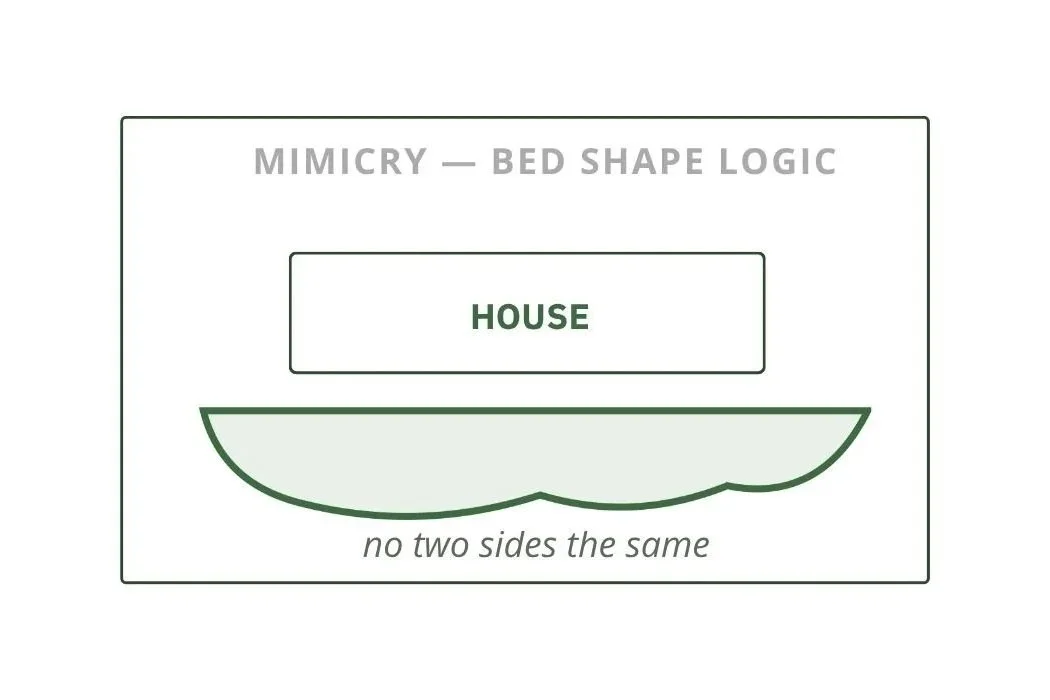
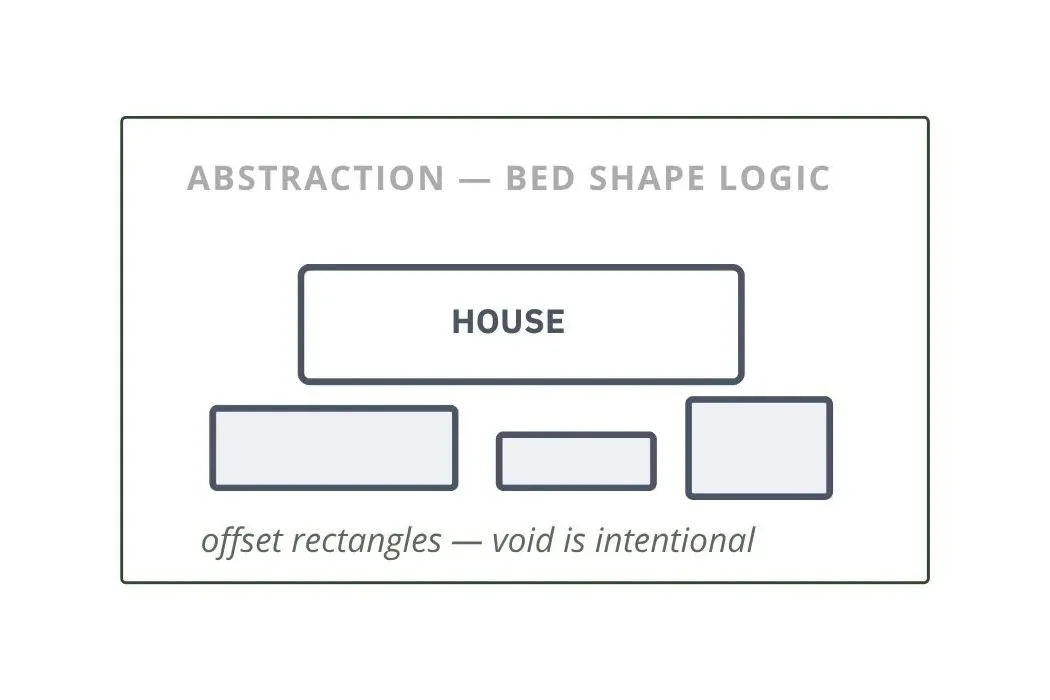
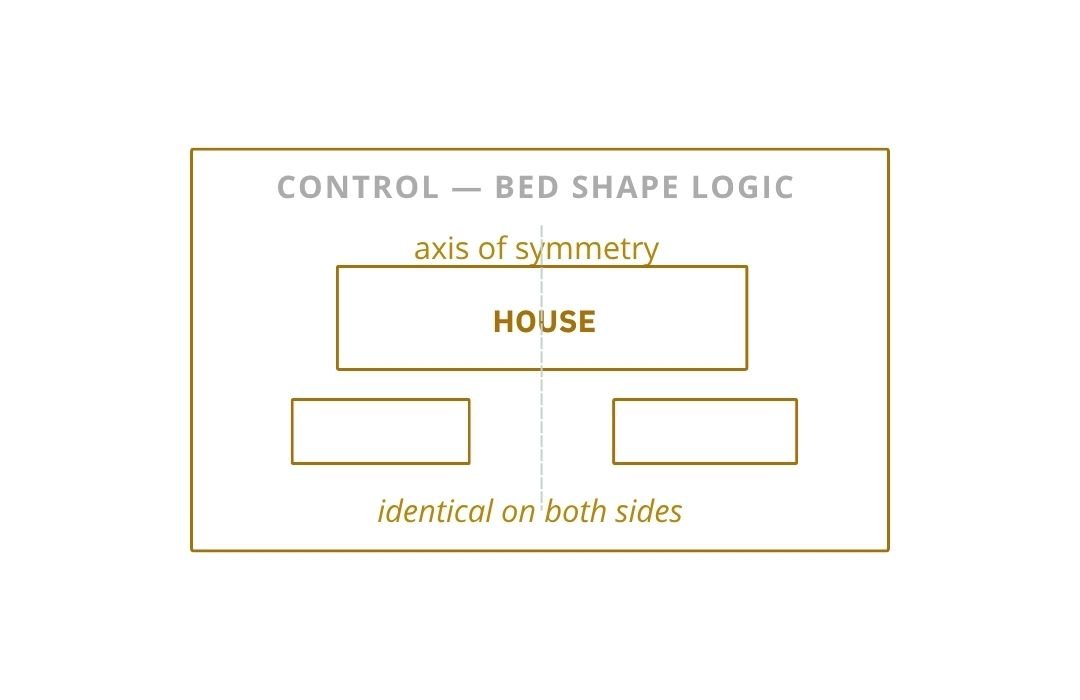
To Natives work in all three of these styles, here are three Texas natives — Texas Sage, Muhly Grass, and Liatris — shown in all three garden geometries. Same plants. Completely different landscapes.
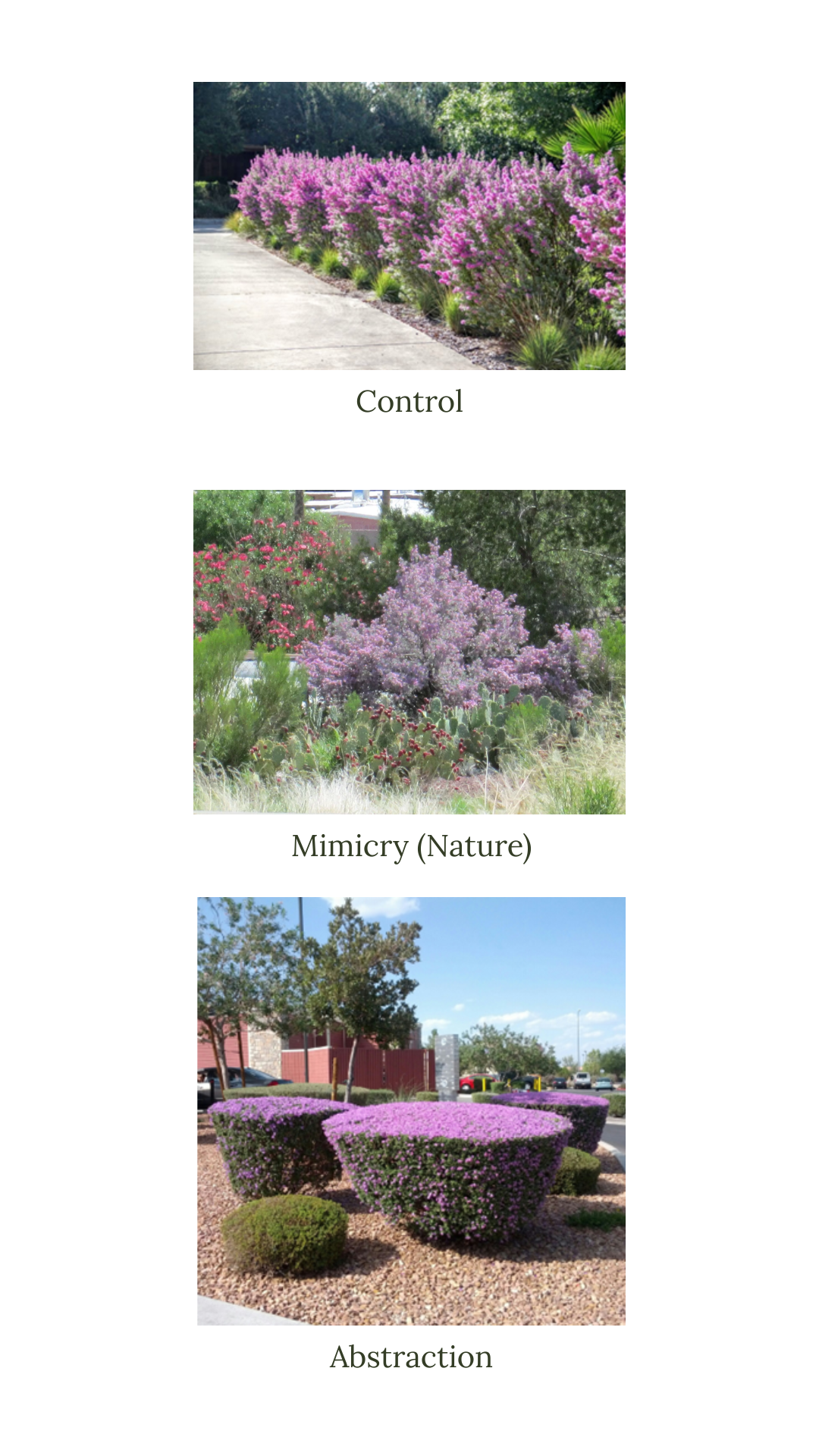
Texas Sage (Leucophyllum frutescens)
If you've driven around Houston after a rain you've seen Texas Sage erupt in purple blooms seemingly overnight. It's one of the most reliably tough plants in this climate — drought tolerant, heat tolerant, deer resistant, and genuinely beautiful when it flushes. It also happens to be one of the most versatile natives in terms of how it can be used.
In Control geometry: Texas Sage takes clipping beautifully, which makes it an ideal formal hedge. Planted in a row and sheared into a consistent shape, it reads as architecture — the same role boxwood plays in traditional formal landscapes but with a fraction of the maintenance and a spectacular purple flush several times a year that boxwood will never give you. Matched pairs flanking an entry are a classic Control move and Texas Sage handles it with ease.
In Mimicry geometry: Allow it to take its natural rounded form and cluster it with other natives of varying heights — maybe inland sea oats at its feet and a Mexican plum behind it. The irregular silhouette fits naturally into a drift-based planting and the purple bloom.
In Abstraction geometry: This is the one that surprises people. Picture a single large Texas Sage sculpted into an asymmetrical organic topiary — not a perfect sphere, but a bold irregular shape with intention behind it. Set it in a bed of decomposed granite or stone, surround it with a few smaller holly shrubs as low counterweights, and suddenly you have a composition that reads as modern sculpture. The plant becomes an art object. The stone is the void. It looks nothing like a native garden in the traditional sense and everything like a considered, contemporary landscape.
Gulf Coast Muhly Grass (Muhlenbergia capillaris)
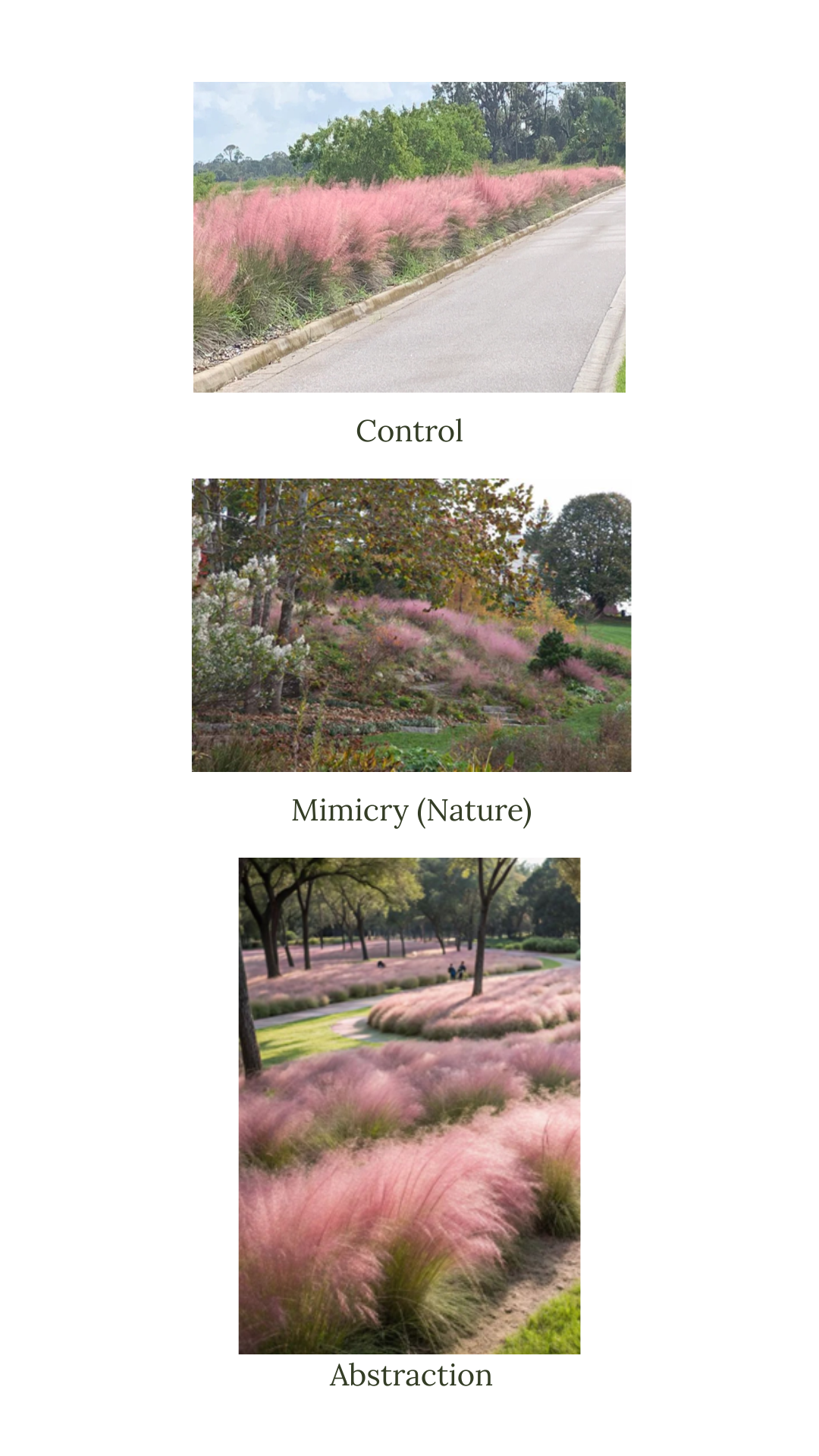
Gulf Coast Muhly is having a moment in Houston landscaping, and for good reason. The fall plume display — that cloud of pink and purple that emerges in October — is one of the most dramatic seasonal moments any Texas native can produce. It's also a plant that behaves completely differently depending on how you use it.
In Control geometry: Plant Muhly in a straight line as a repetitive border element along a bed edge or pathway. Evenly spaced, consistent sizing, the same plant repeated at measured intervals — this is Control logic applied to a native grass. The result is clean, structured, and architectural. When the plumes emerge in fall the row transforms into something spectacular without ever losing its formal discipline.
In Mimicry geometry: Cluster three, five, or seven plants together in an irregular grouping, letting the plumes intermingle and the clumps vary slightly in size. Weave them with other mid-height natives — black-eyed Susan, fall aster, or Turk's cap — so the pink cloud emerges from a layered composition rather than standing alone. This is the drift approach and it reads as naturalistic and effortless even though it was entirely designed.
In Abstraction geometry: Mass plant Muhly in a sharp-edged rectangle — twenty, thirty, fifty plants of the same species filling a defined bed with no variation. You are not looking at individual plants. You are looking at the shape the mass creates and the textural moment the fall plume produces across the entire plane simultaneously. This is one of the most striking uses of a native grass in a modern landscape and it requires almost no maintenance once established.
Liatris (Liatris spicata — Gayfeather)
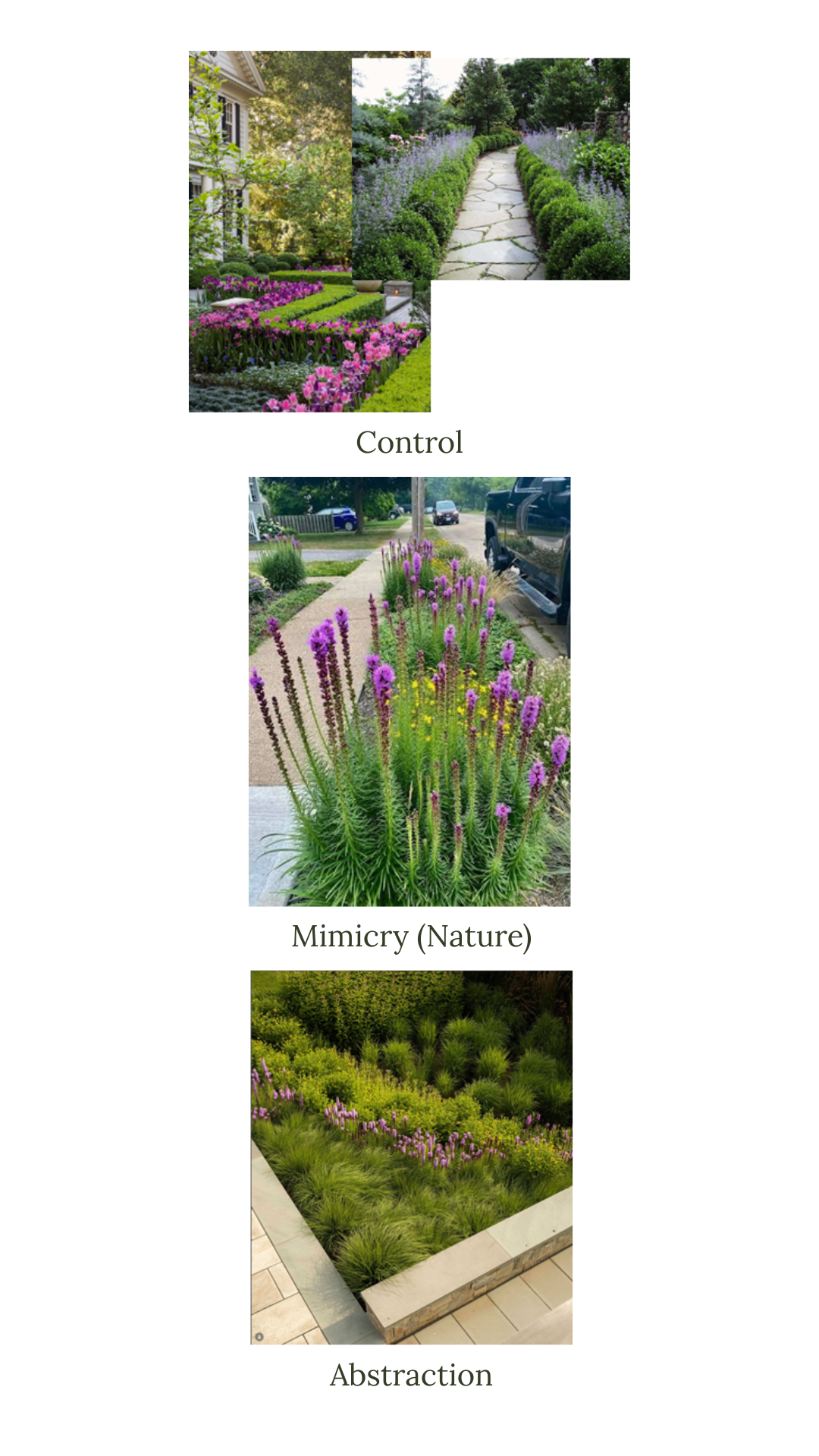
Liatris is the plant that makes the strongest case for rethinking what natives can do in a designed landscape. Its vertical spike — blooming top to bottom in purple — is so architectural that it belongs in a design conversation alongside ornamental grasses and structural perennials. It takes a little imagination to see it outside the wildflower garden context, so bear with me.
In Control geometry: Picture a row of Liatris planted directly behind a clipped boxwood hedge — their vertical purple spikes rising above the formal green line like a procession. If you've ever seen a row of tulips used this way in a formal European garden, the visual is similar. The spike is vertical, the spacing is even, the effect is deliberate and rhythmic. It's a stretch from how most people use Liatris in Houston, but once you see it you can't unsee it. The plant becomes a formal vertical accent rather than a wildflower.
In Mimicry geometry: Scatter Liatris through a drift in odd numbers — three here, five there — letting the purple spikes emerge as the repeated accent element that creates rhythm across the bed. This is the most natural use of Liatris and the one most Houston gardeners are already doing intuitively. The vertical spike against lower rounded plants creates the height variation that Mimicry geometry depends on.
In Abstraction geometry: Plant Liatris in a ribbon — a narrow, sharp-edged linear band running between two mass plantings of ornamental grass. The ribbon of purple spikes becomes a border, a material boundary between two textural planes. You are not using it as a specimen or a drift. You are using it as a line. The effect is graphic and modern and it would look completely at home in a contemporary landscape that has no other flowers in it at all.
The point
Texas Sage, Muhly Grass, and Liatris are all Texas natives. They evolved here, they want to be here, and they will outperform their non-native counterparts in heat, drought, and pest resistance. None of that has anything to do with what style of garden they belong in.
The next time you find yourself in a nursery looking at a native plant and thinking it doesn't fit your aesthetic — look again. You might just be thinking about it in only one geometry.
If you want help figuring out which natives belong in your specific yard and your specific geometry, a Garden Consultation is the place to start. Bring photos of your space and an idea of which geometry resonates with you. We'll do the rest.