

The 5 Best Fruit Trees for Houston Backyards (And Why Most People Choose Wrong)
I've watched too many Houstonians waste $100+ on fruit trees that were doomed from day one. They pick something beautiful at the nursery, plant it with high hopes, and then... nothing. Or worse, it dies spectacularly in August.
The problem isn't you. It's that most fruit tree advice comes from California or the Pacific Northwest—places with totally different climates. What works in their Mediterranean paradise dies in our humid, clay-soiled, freeze-then-flood chaos.
After installing 15+ edible landscapes across Houston and teaching fruit tree classes for years, here are the five trees that actually thrive here—and the specific varietals that won't let you down.
1. Satsuma Mandarins (The Gateway Fruit Tree)
Why they work: Cold-hardy, fast-producing, and delicious. If you only plant one fruit tree in Houston, make it a Satsuma.
Best varietals for Houston:
Owari - The classic. Reliable, sweet, cold-tolerant to 22°F
Armstrong - Earlier harvest, great for impatient gardeners
Miho - Seedless and incredibly sweet
What surprised me: Early Satsumas are ripe before they turn orange. Taste-test starting in October—you'll be shocked how sweet they are while not quite orange.
Planting tip: If you're nervous about freezes, start in a large container. They fruit quickly even in pots, and you can move them to shelter during hard freezes.
2. Figs (The Zero-Fuss Fruit)
Why they work: Figs are nearly indestructible in Houston. They tolerate our clay soil, survive droughts, bounce back from freezes, and produce two crops per year.
Best varietals for Houston:
Celeste (Alma) - Small, honey-sweet figs. My personal favorite
LSU Purple - Larger fruit, heavier yields
Texas Everbearing - Does exactly what the name suggests
The catch: Birds love figs. Harvest in the morning before they wake up, or you'll be feeding the neighborhood wildlife.
What to look for: Ripe figs are soft to the touch with no white latex dripping from the stem. Each varietal has different colors (purple, yellow, brown), so don't wait for them all to look the same.
3. Meyer Lemons (The Container Champion)
Why they work: Compact, nearly thornless, beautiful foliage, and they produce fruit almost year-round. Perfect for patios.
Houston reality check: Meyer lemons are the hardiest lemon, but they still can't handle prolonged freezes. If you're inside the loop or near the coast, you can probably leave them outside with frost cloth. Everyone else: get a container with wheels.
The payoff: One healthy Meyer lemon tree produces 50-100 lemons per year. That's a lot of lemonade, preserved lemons, and lemon curd.
Bonus: The blossoms smell incredible. Plant near a patio door and thank me later.
4. Blueberries (High Maintenance, High Reward)
Why they work: If you can give them what they need—acidic soil and consistent water—they're prolific producers. Plus, they're beautiful shrubs even when not fruiting.
Best varietals for Houston:
Emerald - My absolute favorite. Huge berries, incredible flavor
Windsor - Very productive, handles heat well
Sweetcrisp - Great for eating fresh
The work: Blueberries are the neediest plants on this list. They require:
Containers or raised beds (they hate our clay soil)
Acidic soil (pH 4.5-5.5)
Consistent watering (I recommend drip irrigation on a timer)
Bird netting (they're bird magnets)
Worth it? Absolutely. Fresh blueberries in April and May are a game-changer.
5. Blackberries (The Easiest of All)
Why they work: Blackberries are Texas natives. They're frost-tolerant, drought-tolerant once established, and produce heavily with almost no care.
Best varietals for Houston:
Thornless: Navaho, Arapaho (easier to harvest)
Thorny: Brison, Kiowa (better flavor, heavier yields)
The surprise: You don't need much space. Three to four canes tied to stakes will give you more berries than you can eat fresh. Freeze the extras.
One warning: Wear gloves and a denim shirt when pruning the thorny varieties. Trust me on this.
The Mistakes I See Over and Over
Mistake #1: Planting trees that need "chill hours" we don't have
Apples, peaches, and cherries need 400-800 hours below 45°F to produce fruit. Houston gets maybe 200-400 hours in a mild winter. That's why your peach tree blooms beautifully but never fruits.
Mistake #2: Expecting instant gratification
Most fruit trees take 2-3 years to produce meaningful harvests. The first year, let the tree establish roots—don't let it fruit heavily or you'll stunt its growth.
Mistake #3: Ignoring Houston's clay soil
Our clay doesn't drain well, and most fruit trees hate wet feet. Amend with compost, consider raised beds, or start in containers.
Mistake #4: Planting in too much shade
"Partial shade" means 4-6 hours of direct sun. Most fruit trees need 6-8 hours. That dappled shade under your oak tree? Not enough.
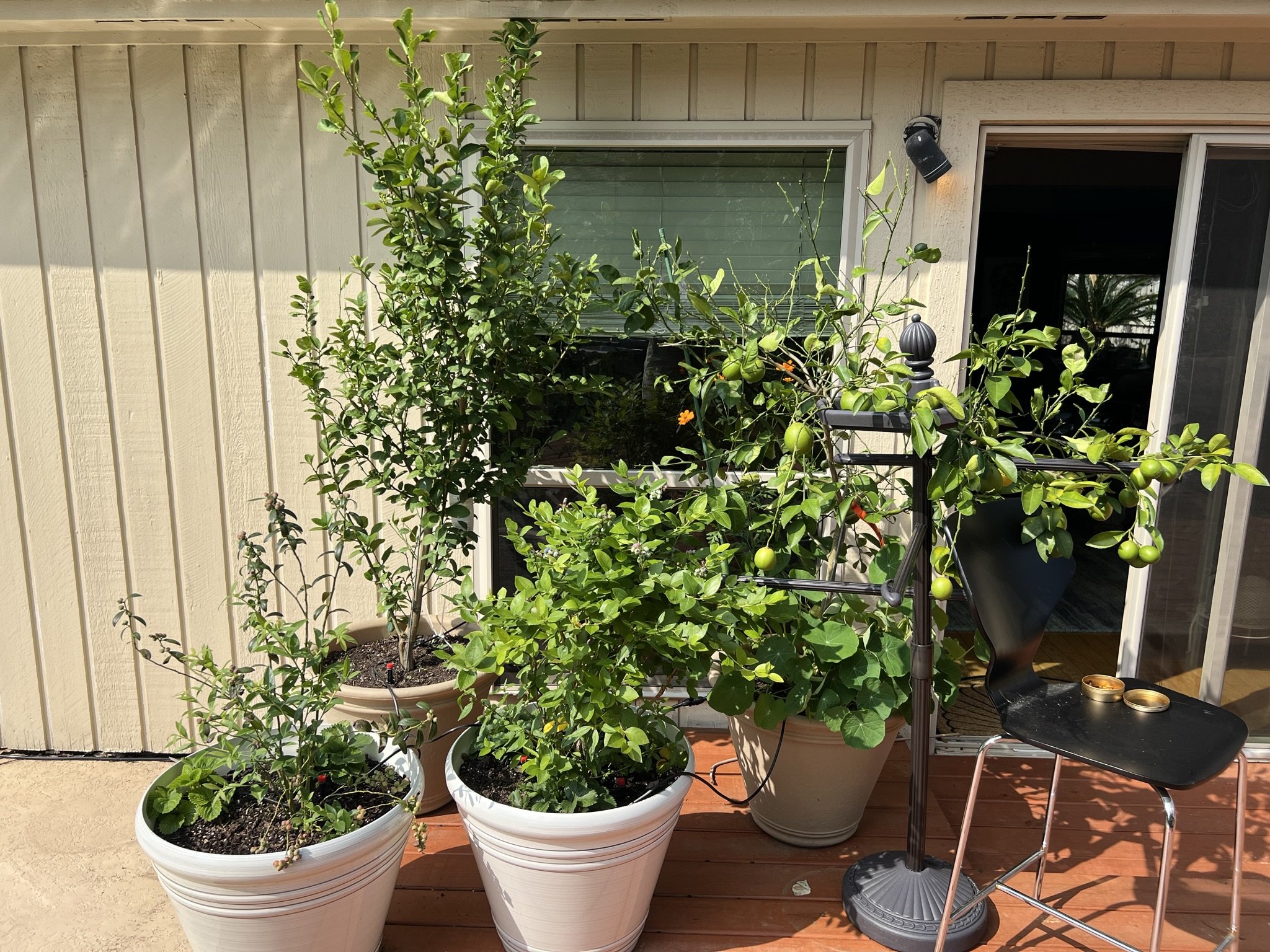
Starting Small
Year Two of my patio fruit farm.
Start Simple, Expand Later
My advice: Pick one tree that excites you. Plant it properly. Learn its quirks. Then add more.
The best backyard orchards I've seen weren't planted all at once. They evolved over 3-5 years as gardeners figured out what worked in their specific microclimates.
And if you want help choosing the right tree for your specific space? That's literally what I do. I coach, consult, and teach classes around Houston. A custom design shows you exactly what will thrive in your sun exposure, soil type, and space constraints.
Happy planting,
Nicole
P.S. Want the full list of varietals I recommend? Sign up for my newsletter—I'm sending out a downloadable Houston Fruit Tree Guide next month.