

How to Outsmart Birds, Squirrels & Neighbors Who Steal Your Fruit
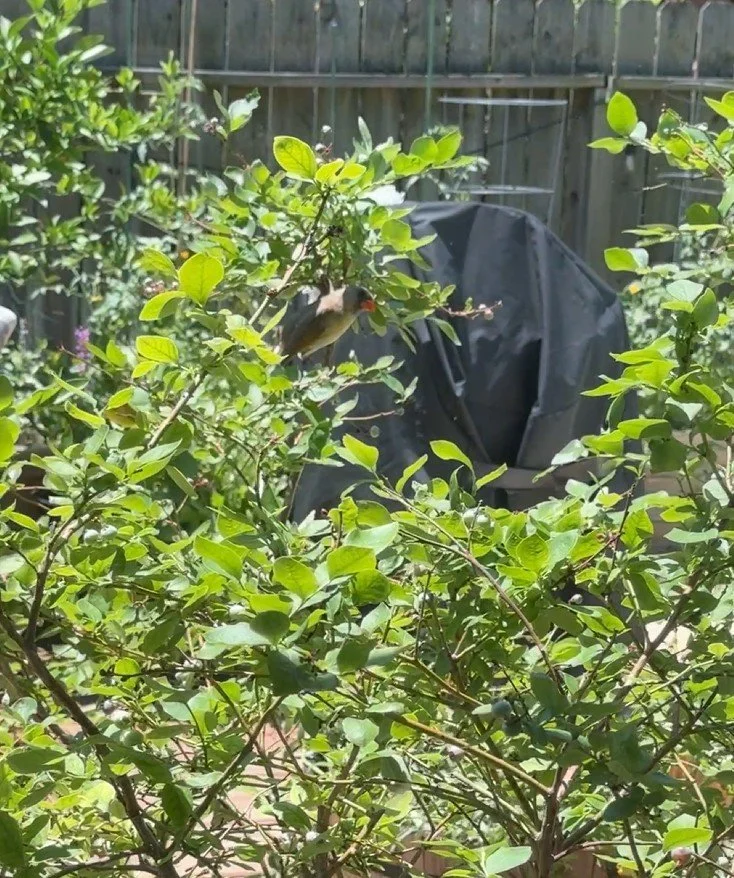
Let me start by saying that I love birds…
However, nothing activated the Elmer Fudd in me like watching birds and squirrels, pick at my precious Emerald blueberries for the first time. That’s why I’ve started using a battle plant for outsmarritng these critters (and the occasional overly-curious human) who think your orchard is a free buffet.
The Abundance Mindset (Or: Why I Don't Stress About Squirrels Anymore)
Before we get tactical, let's talk strategy.
I used to get furious watching squirrels take my fruit. I'd planted it, watered it, waited years for it to produce, and then they got the harvest?
Then I realized: I don't need 100% of the fruit. I need enough for my family.
If I harvest 60% and the squirrels get 40%, I'm still ahead. If birds take half my blueberries but I still get enough for pancakes and smoothies all summer, I've won.
This mindset shift changed everything. Instead of waging war on wildlife, I focused on getting there first and protecting what matters most.
Strategy #1: Be the Earlier Bird
The reality: Animals harvest fruit at peak ripeness. If you wait for "perfectly ripe," they'll beat you to it.
The solution: Harvest slightly early.
What this looks like:
Figs: Pick when they're soft and slightly drooping, even if they seem a day early
Blueberries: Harvest every morning during peak season (June-July). The ones that ripen overnight go to you, not the birds
Blackberries: Pick as soon as they're fully black and come off easily
Citrus: Harvest before they drop. Dropped fruit attracts rats and possums
Pro tip: Set a morning reminder on your phone during harvest season. Harvest at 7 AM before the critters wake up.
Strategy #2: Decoy Planting (Give Them Something Else to Eat)
The idea: Distract wildlife with easier, tastier options elsewhere in your yard.
What works:
Plant a mulberry tree far from your fruit trees. Birds prefer mulberries to almost everything else, and the tree produces for weeks
Scatter bird seed and suet cakes on the opposite side of your yard during harvest season
Leave fallen fruit in a pile away from your trees. Possums and raccoons will focus there first
The sacrifice: You're intentionally feeding wildlife. Some people hate this idea. I'm pragmatic—they're going to eat something in my yard. Might as well direct them away from my best fruit.
Strategy #3: Physical Barriers (When You're Done Being Nice)
Sometimes, you just need to lock it down.
Netting (The Gold Standard)
What it protects: Blueberries, grapes, figs, small fruit trees
How to do it right:
Use bird netting with 1/4" or 1/2" mesh (smaller holes = better protection)
Drape over the entire tree or bush, then secure at the base with stakes or bricks
Install 3-5 weeks before harvest (once fruit starts sizing up)
Check daily for tangled birds—it happens, and you'll need to free them
Pro tip: Build a simple PVC frame around blueberry bushes and drape netting over it. Makes harvesting easier than fighting with draped netting.
Cost: $15-30 for a 25' x 25' net on Amazon
Cages (The Fort Knox Approach)
What it protects: Blueberries, strawberries, small fruit trees
How to do it:
Build a frame with PVC pipe or wood
Cover with chicken wire (1/4" hardware cloth for serious protection)
Add a door for access
Leave it up year-round
The payoff: 99% protection. Squirrels can't chew through hardware cloth.
The downside: It looks utilitarian, not beautiful. Fine for the back corner of your yard, weird in your front landscape.
Reflective Deterrents (The Disco Ball Method)
What it protects: Most fruit, with varying effectiveness
How to do it:
Hang old CDs, reflective tape, or bird scare tape in trees
Add pinwheels or mylar balloons
Move them weekly (birds adapt if they stay in one place)
Does it work? Sometimes. Birds are smart and figure out fake threats quickly. Reflective tape works best when combined with other methods.
Strategy #4: Divide the Harvest (The 60/40 Rule)
The mindset: Accept that you'll share. Plan accordingly.
What this looks like:
Plant two fig trees instead of one. One for you, one for wildlife.
Thin fruit heavily so the remaining fruit is larger and easier to protect
Focus protection on your favorite varieties and let wildlife have the rest
Real example: My client with the squirrel problem planted three fig trees—Celeste, LSU Purple, and Texas Everbearing. She nets Celeste (her favorite), lets squirrels have LSU Purple, and harvests Texas Everbearing early before they notice.
Result: She gets 80% of her favorite figs, squirrels are happy, everyone wins.
Strategy #5: Harvest Timing (The 3-Day Window)
The issue: Most fruit is ready to harvest within a 3-7 day window. Wait too long, and you lose it.
The solution: Check daily during harvest season.
Set calendar reminders:
Blueberries: Check every morning from April through June
Figs: Check every 2-3 days from June through August
Citrus: Check weekly from November through March
Visual cues:
Figs: Soft to touch, drooping slightly, no white sap when you tip the stem
Blueberries: Fully blue with no red near the stem, comes off with gentle pressure
Blackberries: Fully black, comes off easily (if you have to tug, it's not ready)
The "Neighbor Problem" (Let's Be Honest)
The scenario: Your fruit hangs over the fence. Your neighbor helps themselves. You're annoyed.
The law: In Texas, fruit hanging over the property line is fair game. Legally, they can harvest it.
The solution:
Prune back branches that hang over the fence
Harvest early from branches near the property line
Have a conversation: "Hey, I'm planning to harvest this week. I'll bring you some extras!"
Most neighbors are just curious or don't realize you're actively managing the tree. A friendly conversation solves 90% of these issues.
If they're persistently problematic: Prune aggressively away from the property line. It's your tree, your harvest.
What About Deer, Rabbits, and Larger Critters?
Deer: Fencing is the only real solution. 6-8' tall, or they'll jump it.
Rabbits: They mostly eat young bark and leaves, not fruit. Protect trunks with hardware cloth for the first 2-3 years.
Rats and possums: Attracted to fallen fruit. Harvest promptly and clean up drops.
Raccoons: Smart and persistent. Motion-activated lights or sprinklers can deter them.
The Bottom Line: Be Smarter, Not Meaner
I don't use poisons, traps, or lethal methods. Not because I'm a saint—because they don't work long-term and they're miserable to maintain.
Instead, I:
Harvest proactively
Protect what matters most
Share the abundance
Accept that wildlife is part of gardening
And honestly? The year I stopped stressing about squirrels was the year I started enjoying my harvest more.
You don't need to win every battle. You just need enough fruit for your family—and maybe a few jars of jam.
Want help designing a fruit tree setup that's easier to protect? That's exactly what I help with in consultations.
→ Book a 60-minute garden coaching session
Happy (and strategic) harvesting,
Nicole
P.S. If you've found a squirrel deterrent that actually works, email me. I'm always testing new methods.