

Cool Season Planting in Houston
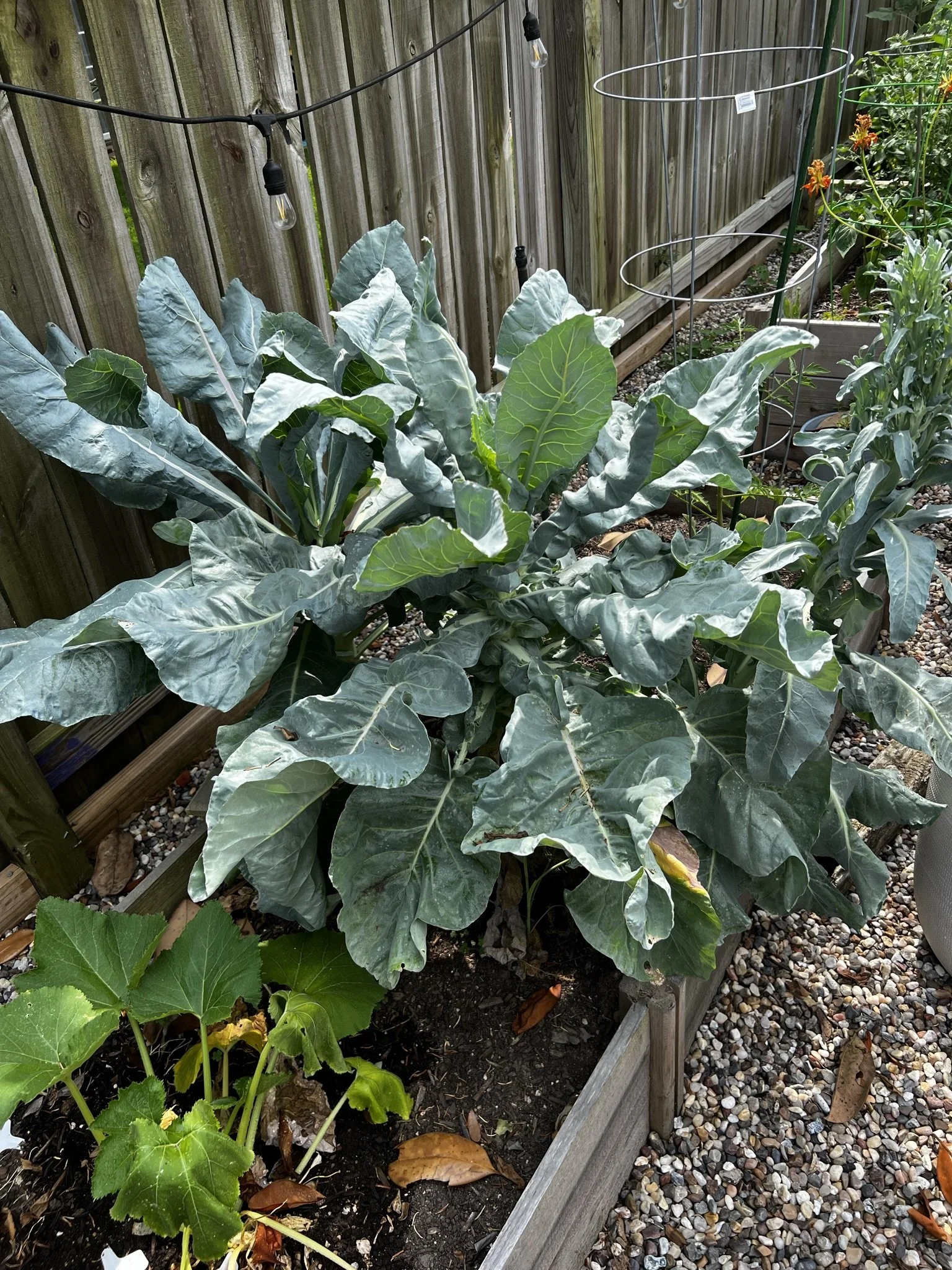
My first brussel sprouts planted too close together and with a layer of mildew. We’ve come a long wa.
Houston has a long ignored growing season that extends from October and February. Myself and the other Gardenary and Flourish nerds call it “cool season” and it is when the temperatures are reliably under 85 degrees but where risk of frost is low. Nearly everyone sleeps on it and I’m here to wake everyone up to its charms.
Why People Skip Cool Season
For most folks it is that they do not know that this season exists. They hear “winter”, envision snow, and imagine that nothing will grow outside. It’s also got some tough timing with school and the holidays right around the corner. Finally, after barely surviving a long hot summer, a lot of gardeners are ready to throw in the trowel. However, all of those gardeners are missing a trick. We don’t get long freezes and even tender greens can be protected in winter with some planning. You can plant most of what you want in the first two weeks of October, before you’ve thought about your Halloween costume. If you’re garden exhausted, cool season gardening is literally and figuratively more chill than spring or even summer. You can settle for throwing a few seeds in some pots or reactivate the raised bed farm. The weather is finally civilized enough to be outside for hours so there is not excuse for not enjoying your cool season garden.
What Can You Grow In Cool Season
Brassicas and Apiaceaes! Brassicas are your hardy greens like kale, brussel sprouts, cauliflower, and broccoli. Think brontosaurus food, not rabbit food. The Apiaceae plants are parsley, cilantro, dill, fennel, parsnip and carrot, aka rabbit food. I call out these plant families because nearly every member can be planted at this time and they generally prefer wet overcast days and cool temperatures. I also call them out because they generally like eachother as companion plants. So instead of building one big bed of cauliflower, you can sneak plantings of dill, cilantro and parsley around the perimeter. Or even a row of carrots! Other plants worth adding are spinach and beets from the Amaranthaceae (Amaranth) family and lettuce from Asteraceae (Sunflower) family.
Planting Spacing
Aside from the “baby” greens, brassicas are generally really big and are heavy feeders. They’ll take up the center of the bed or the back if you’re bed is against a wall. They are fiercely competitive for resources and need between 12-18 inches in spacing depending on their final size. Give brussels 24”. If you have a large pot, it’s only one per pot. But don’t let that stop you from planting fast growing radishes and leaf lettuce in between the heads or around the pot when the brassica is young. And remember to surround them with companion herbs and root veggies on the edges of the beds. There is no reason you shouldn’t have salads all winter with a cauliflower prize by the end of the season. If you’re a visual person, I’ve developed a vegetable garden planning tool that you can use to lay out your bed for the next planting season.
Succession Planting
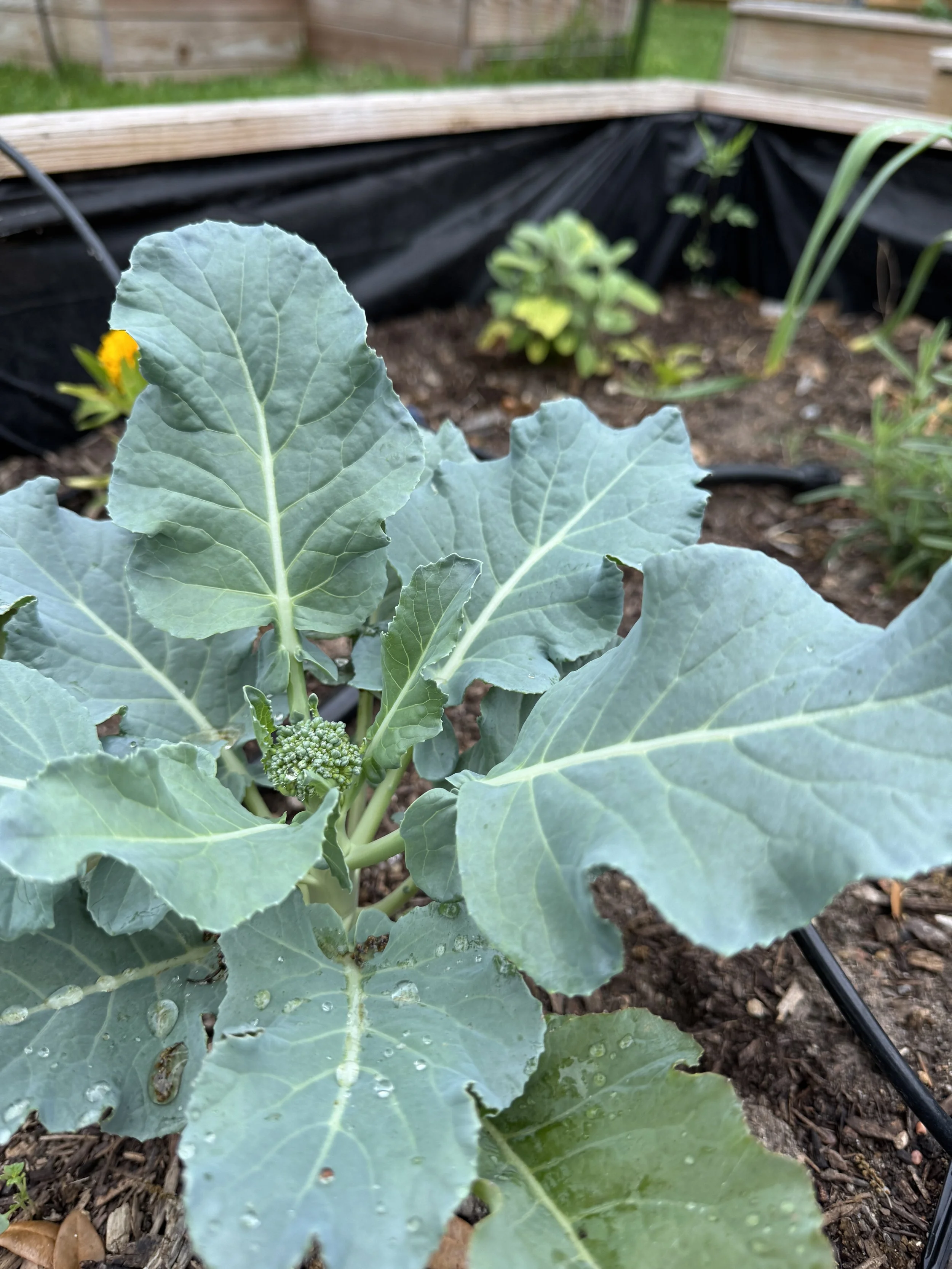
Baby broccoli plant surrounded by herbs and flowers.
This is a trick I use quite a bit in spring but it is clutch for cool season. Because some of the plants are one and done, like carrots, mini-head lettuce, and radishes, I like to sow a new set of seeds every 2-3 weeks. What this does is that as you consume one set, the next crop is coming in and you never have a dead bed. I like to do this in 3-4 alternating rows, to keep track. Again, salads all winter long.
Thinning Root Crops
One day, I will write a post about every piece of advice that my clients love to ignore. Right up there with “you have to remove year 1 fruit”, thinning your root crops is like suggesting that they murder their new plant children. The thing is, that is exactly what you’re doing. You are picking winners every 2-4 inches to allow them plenty of space to be come big, strong, delicious root plants. This is necessary and is what holds back most gardeners from getting a great root veggie crop.
Winter Prep When You Plant
Just because these plants don’t mind a chill, freezing rain or snow is still bad news for your more tender greens. The goal is to put some sort of cloth over the plant without crushing it and leaving some air insulation inside. The cheap hoops from Amazon are pretty effective but a PVC structure works just as well. However, you will want to buy your frost cloth EARLY! It always sells out the week of the freeze and you don’t want to be rushing around. In fact, with some pre-planning, you can have it installed while you’re away on vacation. No freeze panic!
Drip Irrigation Note
When the freezes hit, and they always do, make sure that you’re drip system is disconnected. It can burst your controller and some valves with the expanding water.
If you’re interested in learning more about planting in fall, especially what to plant that you can EAT, chech out my blog series on fall garden to table. And if you’re ready for some hands on help and coaching, book a session with us here! We’d love to help you.